

Fault (three-phase model)#

Block appearance in REPEAT VISION#
The Fault (three-phase model) block implements a mathematical model of interphase short circuits and phase-to-ground short circuits at the connection point to the electrical circuit.
The equivalent circuit diagram of the block is shown in Fig. 1:
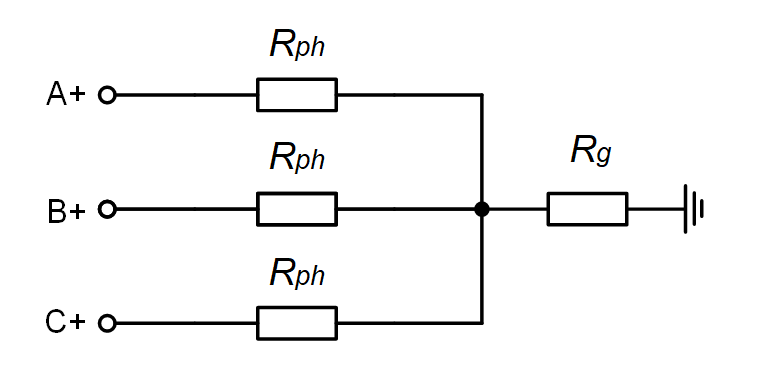
Fig. 1 Equivalent circuit for short circuit simulation#
The following designations of the equivalent circuit elements are shown in Fig. 1:
If a branch is involved in a SC, its resistance is taken to be equal to \(R_ф\) for a phase branch or \(R_з\) for a ground branch. If a branch does not participate in the selected SC type, then the circuit is open at this point.
Note
The block does not simulate arcing processes at the short-circuit location. The resistances \(R_ф\) and \(R_з\) allow for non-zero resistance at the SC location.
1. Method of setting the type of short circuit#
Depending on the value of the Fault type source property, the damage type can be specified in two ways:
Internal– the SC type is selected inside the block in theFault typeproperty from the options offered in table 1. At the initial moment of time, the damage can be disabled or enabled depending on the value of theInitial fault statusproperty;External– the SC type is specified by a numeric code via theFault typeinput port. At the initial moment, the fault is disabled. The correspondence of numerical codes to SC types is also given in table 1.
Important
When changing the SC type during simulation without first disconnecting the SC, intermediate fault configurations are possible. If the Fault clearing mode property is set to At current zero crossing, newly connected phase branches and/or the branch to ground are closed immediately, while branches excluded from the new SC type are opened when the corresponding current crosses zero. For example, when switching from AG to BG, a short-term fault of the ABG type is possible. To avoid intermediate configurations, it is recommended to first disable the SC and wait until all branches are open via the status sensors, then set a new SC type.
SC type |
Letter designation |
Numeric code |
|---|---|---|
No SC |
- |
0 |
Single-phase short circuit of phase A to ground |
AG |
1 |
Single-phase short circuit of phase B to ground |
BG |
2 |
Single-phase short circuit of phase C to ground |
CG |
3 |
Two-phase short circuit of phases A and B |
AB |
4 |
Two-phase short circuit of phases A and B |
AC |
5 |
Two-phase short circuit of phases B and C |
BC |
6 |
Two-phase short circuit of phases A and B to ground |
ABG |
7 |
Two-phase short circuit of phases A and C to ground |
ACG |
8 |
Two-phase short circuit of phases B and C to ground |
BCG |
9 |
Three-phase short circuit |
ABC |
10 |
Three-phase ground fault |
ABCG |
11 |
Note
When specifying a fractional value, it is rounded to the nearest integer. If the resulting numeric code is outside the range of 0 to 11, an error occurs and the calculation stops.
2. Shift control#
Depending on the value of the Fault control mode property, there are two possible ways to set the switching moments in the block:
Internal– the moments of switching on and off of the SC are specified as a vector in theSwitching timesproperty. At each specified moment the state of SC changes to the opposite of the current one;External– the moments of switching on and off the SC are set by an external signal through the input portControl port:
3. Short circuit shutdown mode#
Depending on the value of the Fault clearing mode property, two methods of tripping the fault are available:
Instantaneous– all phase branches and the ground branch involved in the SC are opened immediately after the shutdown command;At current zero crossing– each conducting phase branch opens at the first transition of its current through zero after the shutdown command. When a SC fault is completely disconnected, the ground branch opens no earlier than the last phase branch. When the sSC fault type changes without completely disconnecting, the ground branch opens when the intrinsic current crosses zero.
4. Properties#
Property |
Default Value |
Description |
Units of measurement |
|---|---|---|---|
Fault type source: |
Internal |
When an external source is used, set the fault type using the following numeric codes: |
- |
Fault type: |
AG |
Available, when |
- |
Off |
Available, when |
- |
|
Fault control mode: |
Internal |
- |
- |
Switching times |
0.02;0.04; |
Available, when |
- |
Faulted phase-neutral resistance |
0.001 |
- |
Ohm |
Faulted neutral-ground resistance |
0.01 |
Available, when |
Ohm |
Fault clearing mode: |
Instantaneous |
Instantaneous – all branches open immediately after the command. |
- |
5. Inputs and outputs#
Parameters |
Input/Output |
Description |
Units of measurement |
Port type |
|---|---|---|---|---|
A+ |
Input |
- |
- |
Electronics |
B+ |
Input |
- |
- |
Electronics |
C+ |
Input |
- |
- |
Electronics |
Input |
Available, when |
- |
Automation |
|
Control port |
Input |
Available, when |
- |
Automation |
In order to see the connection capabilities of the block, you need to go to page Description of block ports