

Multi-stream heat exchanger (MF)#
Block appearance in REPEAT VISION#
The Multi-stream heat exchanger (MF) block models the heat exchange process between several hot and cold streams that exchange heat simultaneously.
Law of Conservation of Mass (1) :
where:
\(\dot m_i^{in}\) – mass flow rate of input stream \(i\), [kg/s];
\(\dot m_j^{out}\) – mass flow rate of the output stream \(j\), [kg/s].
Law of conservation of energy eq}MultiHeatExchangerCh2 :
where:
\(\phi_i^{in}\) – energy flow of input stream \(i\), [W];
\(\phi_j^{out}\) – energy flow of output stream \(j\), [W].
When parameterizing a block, the output temperatures of the streams are specified. They can be either known or unknown. There can be no more than three streams with unknown output temperatures.
For one unknown outlet temperature, the solution is based on the law of conservation of energy. For two unknown outlet temperatures, the solution is based on the law of conservation of energy and \(ΔT_{min}\) (the minimum temperature difference between the hot and cold total flows). Total flow – equivalent flow to the input hot or cold flows. With three unknowns, the solution is based on the law of conservation of energy, \(ΔT_{min}\) and \(UA\) (the overall heat transfer coefficient).
For two unknown temperatures (3) :
where:
\(T_{hot}\) – temperature of the hot total flow at the point where the gap between the composite curves is minimal, [°C];
\(T_{cold}\) – temperature of the cold total flow at the point where the gap between the composite curves is minimal, [°C].
Composite curve of the hot total flow – dependence of the cooling temperature of the hot total flow on the amount of heat transferred.
Composite curve of the cold total flow – dependence of the heating temperature of the cold total flow on the amount of heat received.
At three unknown temperatures (4)
We divide the composite curves into temperature intervals using the following principle: arrange all input and output temperatures in ascending order. In the resulting intervals, we calculate the average logarithmic temperature difference. On the graph (see Fig. 1 below) the division into intervals is indicated by dotted lines. The division points are: 15, 20, 30, 37.5, 45, 50, 60, 65, [°C].
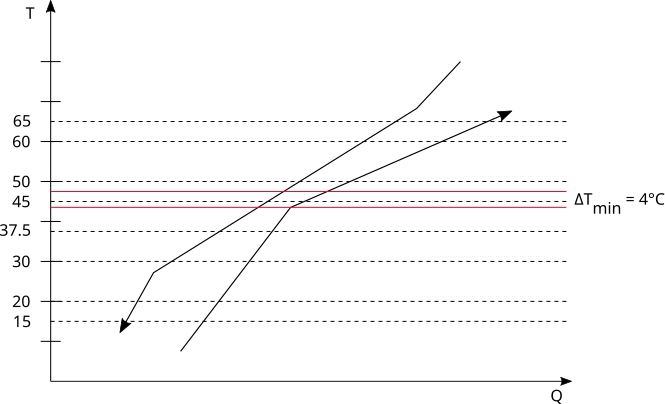
Fig. 1 Calculation of UA using the interval method#
where:
\(Q_k\) – heat transferred or received at each interval, [W];
\(LMTD_k\) – mean logarithmic temperature difference in each interval, [°C], (5) :
where:
\(T_{h,in}\) – temperature of the hot total flow at the inlet to the interval, [°C];
\(T_{c,in}\) – temperature of the cold total flow at the inlet to the interval, [°C];
\(T_{h,out}\) – temperature of the hot total flow at the outlet of the interval, [°C];
\(T_{c,out}\) – temperature of the cold total flow at the outlet of the interval, [°C].
If the difference between \(\Delta T_1\) (6) and \(\Delta T_2\) (7) is less than 10\(^-4\), then the logarithmic mean temperature difference is calculated as the arithmetic mean (8) :
where:
\(\Delta T_1\) – the difference in temperatures of the hot and cold total flows at the inlet to the interval, [°C];
\(\Delta T_2\) – the difference in temperatures of the hot and cold total flows at the outlet of the interval, [°C].
1. Properties#
Property |
Default Value |
Description |
Units of measurement |
|---|---|---|---|
Streams |
Cold: 60.0; Hot: Unknown; Hot: 10.0 |
This is the flow characteristic and its outlet temperature in °C. The outlet temperature may be known or unknown. There cannot be more than three flows with an unknown temperature. |
- |
1 |
- |
- |
|
Minimum temperature difference |
5.0 |
Available, when |
°C |
Total heat transfer coefficient |
60000.0 |
Available, when |
W/(m² ·°C) |
2. Inputs and outputs#
Parameters |
Input/Output |
Description |
Units of measurement |
Port type |
|---|---|---|---|---|
Input |
Input |
- |
- |
Multicomponent fluid |
Input |
Input |
- |
- |
Multicomponent fluid |
Input |
Input |
- |
- |
Multicomponent fluid |
Output |
Output |
- |
- |
Multicomponent fluid |
Output |
Output |
- |
- |
Multicomponent fluid |
Output |
Output |
- |
- |
Multicomponent fluid |
In order to see the connection capabilities of the block, you need to go to page Description of block ports