

Worm gear#
Block appearance in REPEAT VISION#
The Worm gear unit simulates a system in which the rotational motion of the worm gear is converted into rotational motion of the worm and vice versa. The angular rotation frequency is transmitted to the left port and angular frequency of the worm to the right Fig. 1:
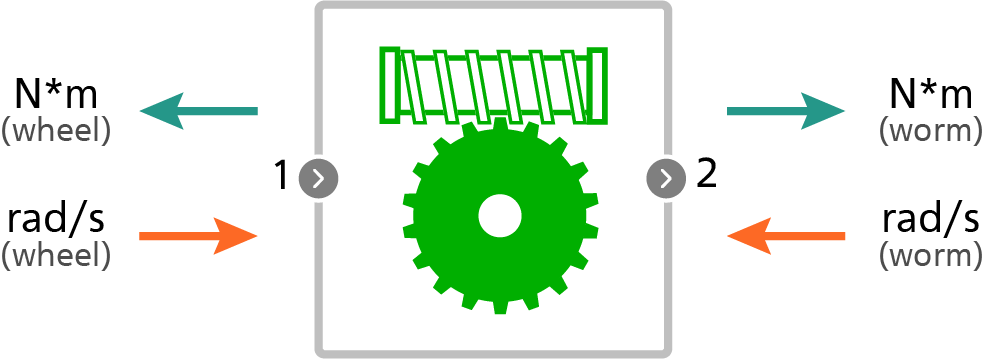
Fig. 1 Icon and external parameters of the Worm gear unit#
The stiffness and damping of the contact surface are necessary to calculate the normal force acting on the threads. Static friction and sliding friction factors shall be specified to account for friction.
In this unit, the “Integrator with reset” friction model is implemented, in which the magnitude of the static friction force depends on the boundary distance of static friction, which is specified in the unit properties.
The unit properties show the geometric parameters of the transmission, the worm thread (the right one is shown on the unit icon). The angle of the profile \(\phi\), relative to which the axial force F\(_a\) is calculated, is specified by the user. The lift angle is calculated relative to the wheel and worm diameters (1) :
where:
\(d_{wheel}\) - worm wheel diameter, [m];
\(d_{worm}\) - worm diameter, [m];
G - gear ratio.
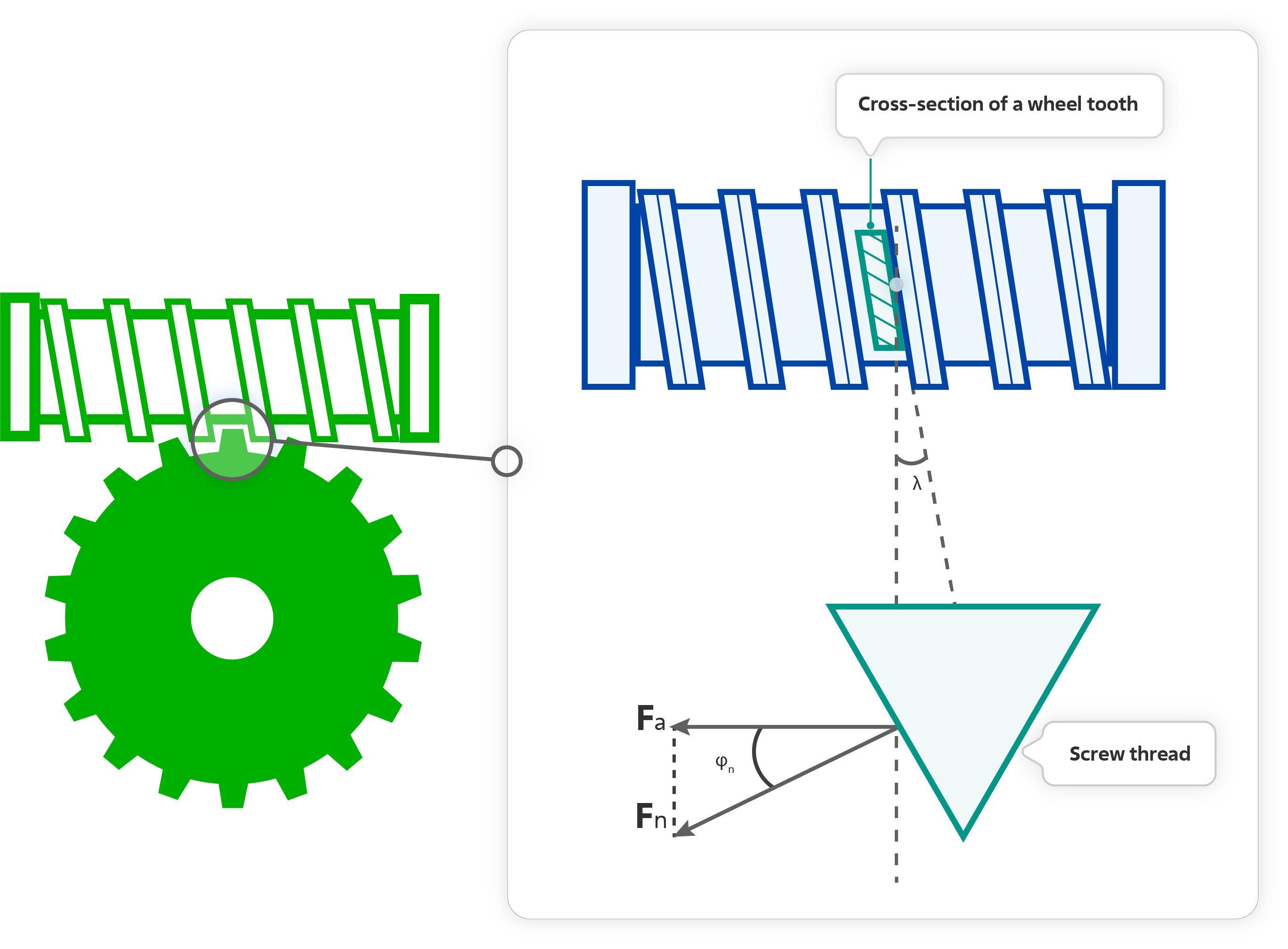
Fig. 2 Calculation of forces on worm screw turn surface#
The resultant force consists of normal and tangent components (see Fig. 2 above). Normal force depends on relative speed and distance traveled (2) :
where:
k - hardness, [N/m];
d - damping, [N \(\cdot\) s/m];
V\(_{rel}\) - relative speed perpendicular to thread turn surface, [m/s].
After determining the normal force, the axial force of the worm is calculated (see Fig. 3 below) using the expression (F\(_a\) in the picture) (3) :
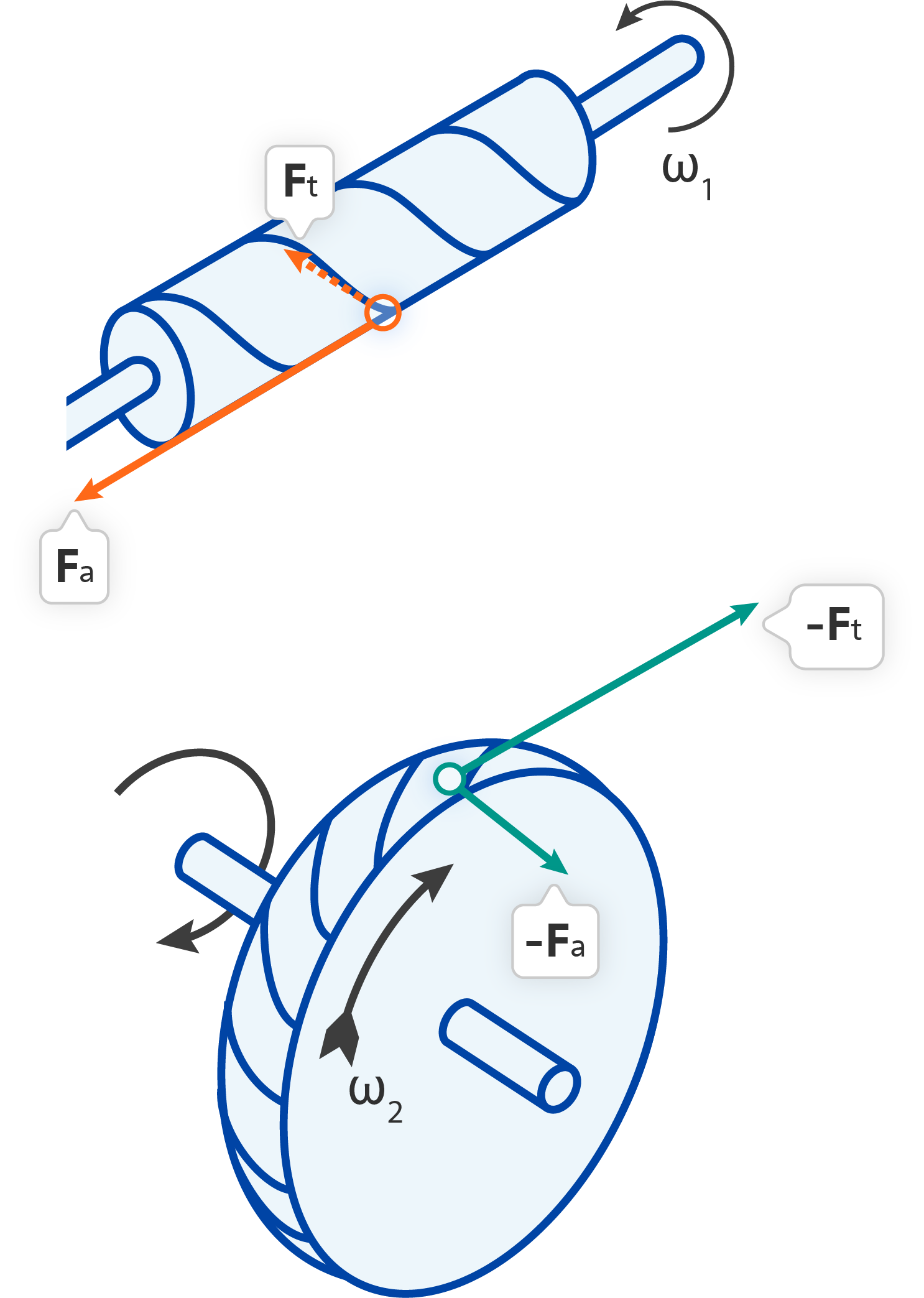
Fig. 3 Axial (F\(_a\)) and tangential force (F\(_t\)) of worm#
Initially, the transmission is in rest mode, a static friction force is formed at a non-zero relative speed (4) :
In static friction, the tangential force depends on the distance boundary s\(_{boundary}\) (5) :
where:
\(k_{static.}\) - stiffness at static friction;
\(s_{boundary}\) - boundary distance, at overcoming of which sliding mode occurs;
\(c_{static.}\) - coefficient of static friction;
\(v_{rel.tang.}\) - relative speed parallel to screw thread turn surface.
In sliding mode, friction is calculated relative to the normal force using the expression (6) :
The Stribeck effect allows a smooth transition between static and dynamic friction. Turn on the Account Stribeck effect toggle switch to take this effect into account. With this configuration, the friction force becomes exponential and is determined by the expression (7) :
Force acting on the nut F\(_{гайка}\) (8), and moment acting on a screw М\(_{винт}\) (9), are calculated using the formulas:
As a result, the torques on the wheel (10) and worm (11)are calculated by the expressions:
Hint
Also, the worm rotates the wheel using the Reverse motion direction toggle switch (see Fig. 4 below).
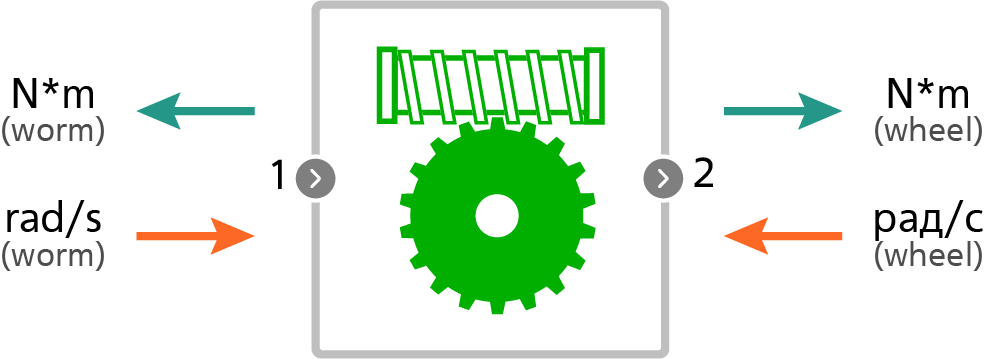
Fig. 4 External parameters when the movement direction changes#
1. Properties#
Property |
Default Value |
Description |
Units of measurement |
|---|---|---|---|
Gear ratio |
2.0 |
- |
- |
Worm wheel diameter |
0.01 |
- |
m |
Worm diameter |
0.005 |
- |
m |
Contact stiffness |
1000.0 |
- |
N/m |
Contact damping |
1000.0 |
- |
N/(m/s) |
Coulomb friction coefficient |
0.01 |
- |
r.u. |
Stiction coefficient |
0.02 |
- |
r.u. |
Stick displacement threshold |
0.001 |
- |
- |
Viscous friction stiffness during stiction |
1000.0 |
- |
N/(m/s) |
Normal pressure angle |
5.0 |
- |
deg |
Selecting the direction of the worm thread: |
Off |
- |
- |
Off |
- |
- |
|
Stribeck effect transfer velocity, available when select [ |
0.001 |
- |
m/s |
Off |
On - conversion of translational motion into rotational motion; |
- |
2. Inputs and outputs#
Parameters |
Input/Output |
Description |
Units of measurement |
Port type |
|---|---|---|---|---|
Wheel angular velocity |
Input |
Available, when property [ |
rad/s |
Rotational motion |
Worm angular velocity |
Input |
Available, when property [ |
rad/s |
Rotational motion |
Worm torque |
Output |
Available, when property [ |
N\(\cdot\)m |
Rotational motion |
Wheel torque |
Output |
Available, when property [ |
N\(\cdot\)m |
Rotational motion |
In order to see the connection capabilities of the block, you need to go to page Description of block ports